We work directly with the Andean communities that care for Rainbow Mountain.
Our approach focuses on local hiring, fair payment, low-impact travel, and shared decision-making with the families who maintain the trails. Every tour supports community-run services, protects fragile high-altitude ecosystems, and helps keep Vinicunca and Red Valley healthy for generations.
If you’d like to understand exactly how we operate on the mountain, explore our sustainability practices below and see how each part of your visit directly supports the communities who make Rainbow Mountain possible.
Our commitment to communities

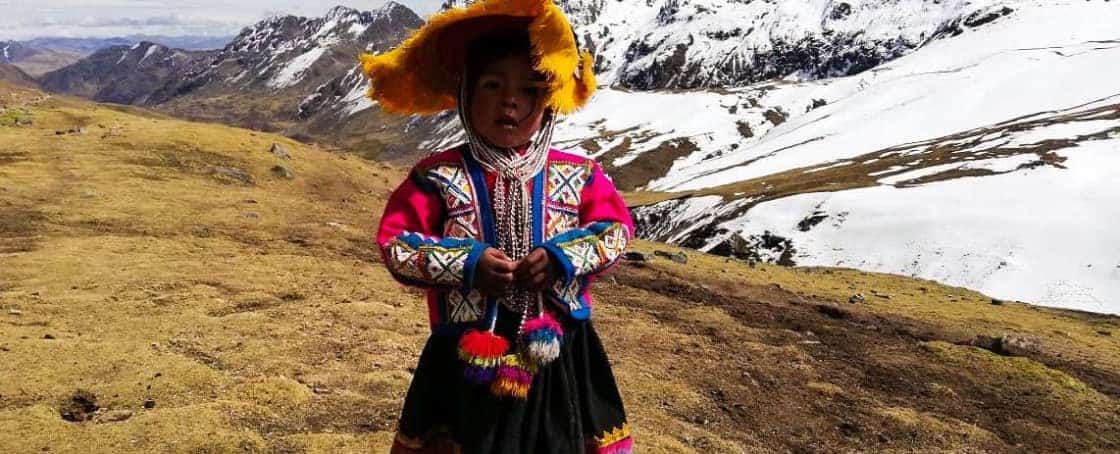
Rainbow Mountain would not be accessible without the nearby high-altitude communities that maintain the paths, care for the llamas and horses, and welcome visitors each day. We work hand-in-hand with local families and municipal authorities to ensure tourism remains a positive force.
Local hiring first
We prioritize long-term partnerships with local guides, cooks, horsemen, and drivers. Instead of outsourcing to short-term contractors, we invest in ongoing training and steady employment so that families in Chillca, Pampachiri, and surrounding villages benefit directly from tourism.
Keeping money in the region
Whenever possible, we utilize community-run services, including meals prepared by local kitchens, horses owned by community members, and staff recruited directly from the area. This ensures tourism income stays within the Ausangate corridor rather than flowing to outside companies.
Respecting community rules
Each community around Vinicunca sets guidelines about trail use, visitor flow, cultural respect, and environmental protection. Our team follows these rules strictly and communicates them clearly to travelers. Responsible tourism only works when local families maintain control over their land.
When you travel with us, your ticket directly supports these Andean households.
Environmental responsibility
Vinicunca sits above 5,000 m, in one of the most fragile environments in the Andes. Small choices made by each group add up quickly, which is why our environmental approach focuses on low-impact, respectful travel.
Trail protection
We use only marked, authorized trails. These paths are designed with community leaders to reduce erosion and keep high-altitude vegetation safe.
Leave-no-trace practices
Guides carry basic cleanup supplies and ensure that all waste (even organic waste) returns to Cusco. Nothing stays on the mountain.
Responsible group sizes
Smaller groups mean a calmer, more respectful experience and less wear on the trail. It also allows our guides to monitor altitude symptoms more safely.
Modern, well-maintained vehicles
We operate regularly serviced transport that meets regional safety standards. Efficient vehicles reduce emissions and help protect the air quality of the Ausangate region.
Across thousands of visitors, these small actions make a real difference.
Fair, transparent partnerships
For us, sustainability is not a slogan. It’s the foundation of how we operate every day. Our relationships with communities are built on fairness, communication, and shared decision-making.
Fair and stable payment for local families
We agree on clear, stable rates with the community for the services we directly contract: entrances, meals, trail support, and local staff. These payments are made consistently, without last-minute bargaining or rotating labor to cut costs. Predictable income helps families plan beyond the high season.
Constant communication with community leaders
Weather, snow, landslides, festivals, and roadworks can change conditions quickly at 5,000 m. We stay in daily contact with local authorities to align on: Route updates, trail maintenance priorities, and safety concerns.
Shared decisions about experiences and add-ons
Experiences like the Red Valley extension, community meals, or viewpoint detours are only offered when community leaders approve conditions. We adjust itineraries with the communities, not around them, so that tourism remains respectful and manageable for everyone involved.
Long-term support instead of seasonal extraction
Some operators hire quickly during high season and disappear once demand drops. We avoid this cycle entirely. Our model relies on repeatable, predictable work for staff and supports community-led projects when trails need repair or facilities need upgrades.
Building stability over chasing the cheapest price
Low prices often come from cutting pay, skipping community fees, or ignoring local rules. We refuse those shortcuts. A fair, transparent partnership model keeps: workers respected, trails maintained, families supported, and the experience authentic and safe for travelers.
Sustainability only works when everyone benefits: the land, the communities, and the visitors enjoying these incredible high-altitude landscapes.
Why sustainability matters on Vinicunca
Vinicunca and the neighboring Red Valley sit at 5,000 m, in one of the most fragile ecosystems in the Andes. Since these routes gained popularity around 2016, the number of daily visitors has surged, and that growth comes with real pressures on both the land and the communities that protect it.
The high-altitude environment is extremely fragile
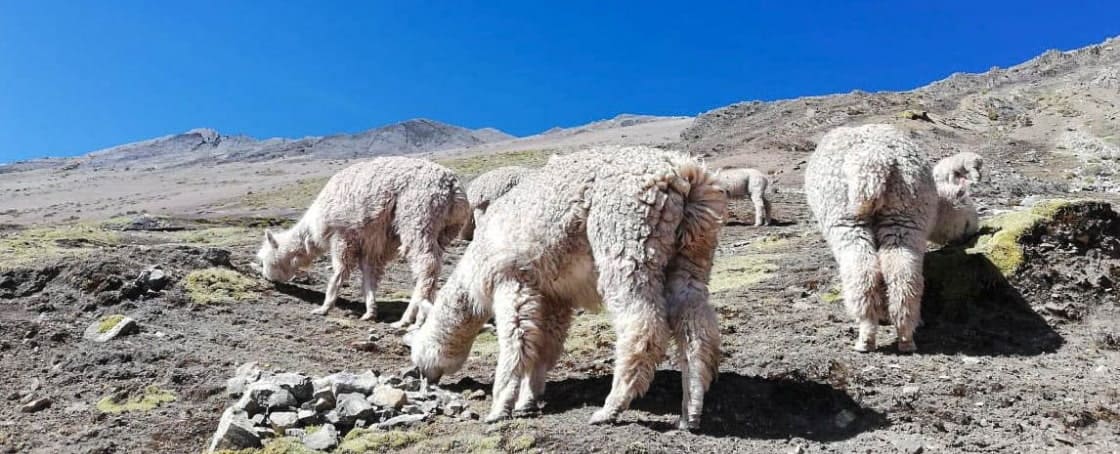
Above 4,800 m, soil forms incredibly slowly. A single season of heavy foot traffic can undo years of natural regeneration. Protecting the mountain isn’t only aesthetic. Preserving vegetation also stabilizes slopes and protects downstream water sources used by alpaca-herding families.
Unregulated tours magnify environmental and safety problems
When operators run tours without coordination or community oversight, several issues appear: Litter and food waste, improper vehicle access, poor timing management, and a lack of altitude protocols. These problems cost communities time, money, and labor to fix, and they accelerate physical damage to the route.
Low-cost operations often bypass local communities entirely
Cheap tours are usually cheap because they cut out the families who maintain the trail. Common issues include: Paying minimal or inconsistent entrance fees, bringing outside staff, using external restaurants, and making no contribution to community infrastructure.
Sustainable tourism safeguards the landscapes and cultures that make this area unique. When local families are included and respected, the region remains beautiful and welcoming for generations.
Our philosophy: tourism as a shared benefit
Rainbow Mountain Travels operates directly from Cusco, but our success depends entirely on the communities that allow access to their land. We believe tourism should:
Empower families
Protect cultural traditions
Preserve landscapes
Create meaningful connections between travelers and hosts
Sustainable travel is not just how we operate, but why we operate. It is the only way this route stays special: for travelers seeking an unforgettable day in the mountains, and for the families who live here year-round.
